
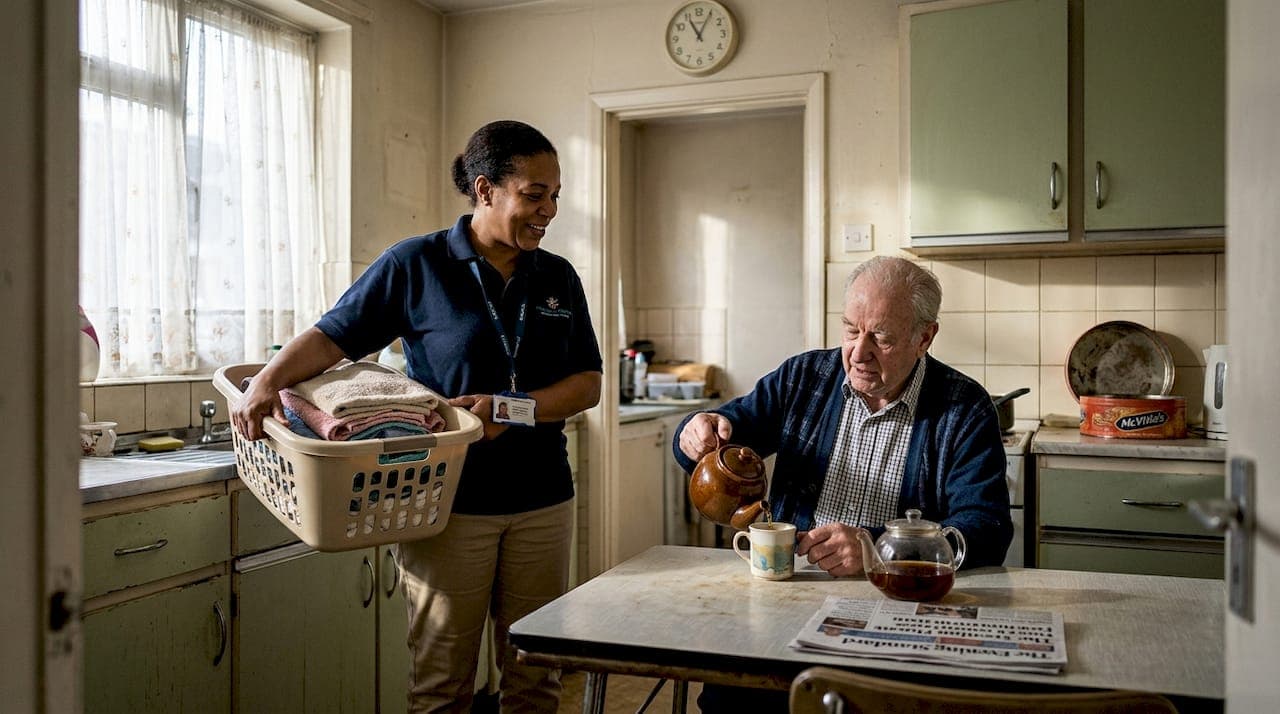
Many people assume in-home assistance is reserved solely for the elderly or severely ill, but this couldn't be further from the truth. In reality, personalised home support encompasses a wide spectrum of tailored services designed to help individuals and families maintain their independence whilst managing daily tasks more comfortably. Whether you're recovering from surgery, juggling a demanding career, or simply seeking companionship and practical help around the house, in-home assistance offers flexible solutions that adapt to your unique circumstances. This guide clarifies what services are available across London, how they work in practice, and the tangible benefits they deliver for households seeking to enhance quality of life without compromising autonomy.
Table of Contents
- Key takeaways
- Understanding what in-home assistance involves
- How in-home assistance works: processes, care plans and regulations
- Benefits and challenges of in-home assistance for London families
- Practical guidance: choosing and benefiting from in-home assistance in London
- Discover personalised in-home support with Everyday Ease Lifestyle Support
- What is in-home assistance? Frequently asked questions
Key Takeaways
| Point | Details |
|---|---|
| Delivery models | Two main formats exist: visiting care and live in care, providing flexible schedules and continuous support as required. |
| Wide range of services | From personal hygiene and meal preparation to companionship, medication reminders, housekeeping and errands, all tailored to individual needs. |
| Promotes independence | The personalised approach helps people remain in their own homes while maintaining autonomy and routines. |
| Assessment and care plans | A needs assessment followed by bespoke care plans that are reviewed and updated as needs change. |
Understanding what in-home assistance involves
In-home assistance, known as domiciliary or home care in the UK, involves professional carers providing support in an individual's own home for daily tasks, personal care, companionship, and sometimes administrative help like medication reminders and errands. This personalised approach allows people to remain in familiar surroundings whilst receiving the specific support they need, whether that's help with mobility, housekeeping, or simply having someone to chat with over a cup of tea.
The scope of home help services in London extends far beyond traditional elderly care. Services are tailored to individual circumstances and can include:
- Assistance with personal hygiene, dressing, and grooming
- Meal preparation and dietary support
- Medication reminders and health monitoring
- Light housekeeping, laundry, and ironing
- Shopping, errands, and appointment accompaniment
- Companionship and social engagement
- Administrative tasks like bill payments and correspondence
- Mobility assistance and support with exercise routines
You'll find two main delivery models: visiting care and live-in care. Visiting care involves carers attending your home for scheduled periods, typically ranging from 30 minutes to several hours daily, depending on your requirements. Live-in care provides round-the-clock support with a carer residing in your home, offering continuous assistance for those with more complex needs or who prefer constant companionship. The beauty of modern in-home assistance lies in its flexibility, allowing you to choose the level and type of support that genuinely fits your lifestyle rather than conforming to a one-size-fits-all approach.
Client profiles vary enormously. Busy professionals use these services to manage household tasks they simply don't have time for. Families recovering from illness or surgery rely on temporary support during rehabilitation. Elderly individuals maintain their independence whilst receiving help with tasks that have become physically challenging. The common thread isn't age or disability, it's the desire to live comfortably and safely at home with tailored assistance that respects personal preferences and routines.
How in-home assistance works: processes, care plans and regulations
The journey typically begins with a comprehensive needs assessment conducted by the care provider or local authority. This initial consultation identifies your priorities, preferences, daily routines, and any specific health or mobility considerations. You'll discuss everything from preferred meal times to whether you'd like help with gardening or prefer your carer to focus on indoor tasks. This conversation forms the foundation for your personalised care plan.
Bespoke care plans are then developed to match your exact requirements. These living documents outline the specific tasks your carer will perform, preferred schedules, communication methods, and any particular approaches that work best for you. Care plans aren't static; they evolve as your needs change, ensuring the support remains relevant and effective. The mechanics include initial needs assessment, creation of bespoke care plans, visiting care sessions ranging from 30 minutes to several hours, live-in care providing 24/7 support, all regulated by the Care Quality Commission, with carers trained in personal care, housekeeping, and mobility assistance.
Here's how the process unfolds once you've chosen a provider:
- Complete the initial needs assessment to establish your requirements and preferences
- Review and approve your personalised care plan with specific tasks and schedules
- Meet your assigned carer(s) before services begin to ensure compatibility
- Begin scheduled visits or live-in arrangement with regular check-ins from the provider
- Provide feedback and request adjustments as your needs evolve over time
Regulation provides crucial peace of mind. The Care Quality Commission oversees home care providers, inspecting services, reviewing complaint handling, and ensuring staff receive proper training. CQC ratings are publicly available, allowing you to make informed choices about providers. Care workers undergo training in personal care techniques, safe moving and handling, use of mobility aids, medication administration, safeguarding, and often specialised training for conditions like dementia or Parkinson's disease.
Pro Tip: When interviewing prospective providers, ask specifically about carer training programmes, continuity policies (will you see the same carer regularly?), and how they handle staff absences. Consistent carers build trust and understand your preferences better, leading to higher quality support and greater comfort in your daily routine.
Benefits and challenges of in-home assistance for London families
The evidence for in-home assistance's positive impact is compelling. Re-ablement services reduce ongoing care hours by 28%, with 53 to 68% of people needing no further home care after re-ablement programmes, and 36 to 48% remain independent after two years. These aren't just statistics; they represent thousands of individuals who've regained confidence in managing daily tasks and maintained their autonomy far longer than might otherwise have been possible.
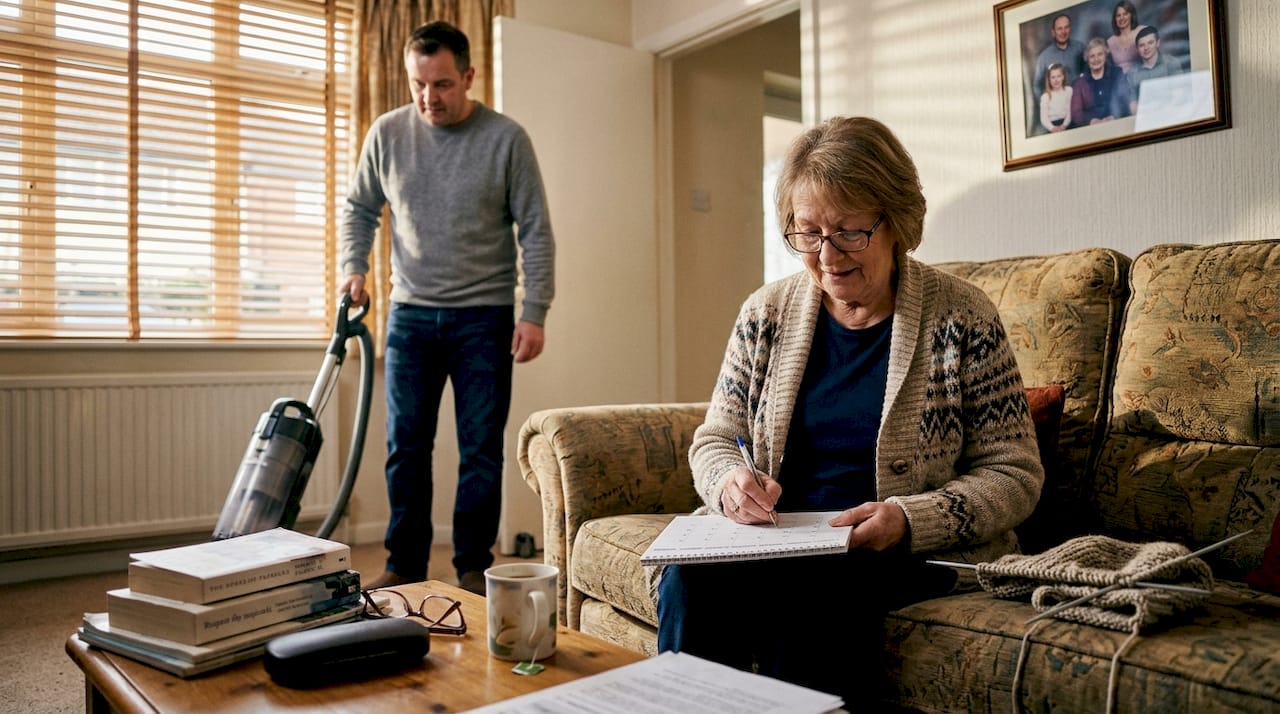
Economic benefits extend beyond individual households. The HomeHealth randomised controlled trial in England showed no significant improvement in independent functioning at 12 months, but delivered cost savings of £796 per person with fewer hospital admissions, demonstrating high probability of cost-effectiveness. When people receive appropriate support at home, they're less likely to experience falls, medication errors, or health deteriorations that require expensive emergency interventions.
| Benefits | Challenges |
|---|---|
| Maintains independence and familiar routines | NHS delays in assessment and funding decisions |
| Reduces hospital admissions and readmissions | High staff turnover (30.6%) and vacancy rates (13%) |
| Cost-effective compared to residential care | Space constraints in smaller London properties |
| Personalised support respecting preferences | Managing complex health conditions requires specialist skills |
| Improves quality of life and mental wellbeing | Privacy concerns in live-in arrangements for couples |
| Enables ageing in place in own home | Behavioural challenges in dementia care |
Yet challenges persist that London families must navigate carefully. Crisis-delayed decisions increase risks, whilst the staffing crisis creates significant pressure with 30.6% turnover and 13% vacancy rates, and whilst home care proves cheaper than residential options, it may prove inadequate for highly complex needs without additional support. Common practical obstacles include:
- Lengthy waiting times for NHS-funded assessments and care packages
- Inconsistent carer assignments due to staffing shortages affecting relationship building
- Limited space in typical London homes for equipment or live-in carer accommodation
- Difficulty finding carers with specialised training for conditions like advanced dementia
- Privacy and relationship dynamics when live-in care affects couple's routines
"The home care sector faces a critical staffing challenge, with turnover rates exceeding 30% annually. This instability directly impacts care quality and continuity, making provider selection and retention policies crucial considerations for families seeking reliable support."
Pro Tip: Don't wait for a crisis to arrange care. Early assessment and gradual introduction of support services allows time to find the right provider, build relationships with carers, and adjust arrangements before urgent needs arise. Planning ahead dramatically improves outcomes and reduces the stress of rushed decisions during difficult circumstances.
Practical guidance: choosing and benefiting from in-home assistance in London
Selecting the right provider requires methodical evaluation. Start by clearly defining your needs through honest self-assessment or family discussion. What tasks genuinely require assistance? Which times of day are most challenging? Do you need daily support or occasional help? Your answers shape the type of service and provider that'll work best.
Follow these steps to identify a suitable provider:
- Research CQC-regulated providers serving your London borough and review their inspection ratings
- Request information about their services, pricing structures, and carer training programmes
- Interview at least three providers, asking about continuity policies and how they handle staff absences
- Check references from current clients, focusing on reliability and quality of care delivery
- Arrange trial periods with shortlisted providers before committing to long-term contracts
- Review contracts carefully, understanding cancellation policies and procedures for raising concerns
Person-centred care plans form the cornerstone of effective in-home assistance. Expert guidance emphasises person-centred plans, carer training in equipment like hoists and moving in tight spaces, and continuity of care which reduces end-of-life costs in conditions like dementia. Insist that your care plan reflects your preferences, routines, and values, not just your physical needs. If you prefer breakfast at 9am rather than 7am, that matters. If you'd rather your carer focused on companionship during walks than intensive housework, specify that.
Home modifications and assistive technology significantly enhance the effectiveness of in-home assistance. Age-friendly home modifications improve self-rated health and life satisfaction in older adults, making relatively simple changes worthwhile investments. Consider:
- Grab rails in bathrooms and along hallways to support mobility and prevent falls
- Improved lighting, particularly on stairs and in bathrooms, reducing accident risks
- Pendant alarms or monitoring systems providing emergency contact capabilities
- Raised toilet seats and bath aids facilitating independent personal care
- Reorganised storage placing frequently used items at accessible heights
- Non-slip flooring in wet areas and clear pathways reducing trip hazards
Managing privacy concerns, especially in live-in arrangements, requires open communication. Establish clear boundaries about private time, personal space, and household routines from the outset. Discuss how you'll handle visitors, mealtimes, and evening routines to ensure everyone feels comfortable. Regular check-ins with your provider allow you to address any concerns before they become significant issues.
Continuity of carers cannot be overstated. When you see the same carer regularly, they learn your preferences, notice subtle changes in your wellbeing, and build genuine rapport that transforms care from a transaction into a supportive relationship. This consistency proves particularly valuable for people with cognitive conditions, where familiar faces reduce confusion and anxiety. It also saves time; new carers require orientation to your home, preferences, and routines with each visit.
Pro Tip: Keep a simple communication log or diary that you and your carer update after each visit. Note completed tasks, any concerns, and upcoming needs. This creates continuity even when different carers attend and provides valuable documentation if you need to adjust your care plan or address issues with your provider.
Discover personalised in-home support with Everyday Ease Lifestyle Support
If you're exploring personalised in-home support in London, Everyday Ease Lifestyle Support offers the tailored approach this guide has emphasised. Their DBS-verified team delivers comprehensive services spanning personal care, companionship, errands, admin support, home organisation, and wellbeing check-ins, all designed around your unique circumstances and preferences.

What distinguishes their service is genuine flexibility. Whether you need occasional help with specific tasks through their pay-as-you-go option, regular weekly support, or comprehensive monthly packages, they adapt to your lifestyle rather than forcing you into rigid arrangements. Their focus on continuity means you'll work with familiar faces who understand your routines and preferences, building the trust that makes in-home assistance truly effective. Contact them for a personalised needs assessment and discover how the right support can enhance your independence and daily comfort.
What is in-home assistance? Frequently asked questions
Who typically uses in-home assistance services?
In-home assistance serves diverse groups including elderly individuals wanting to age in place, busy professionals needing household support, families caring for relatives with disabilities, and people recovering from surgery or illness. Services aren't limited by age; anyone seeking help with daily tasks, companionship, or maintaining their home can benefit from tailored support.
What's the difference between visiting care and live-in care?
Visiting care involves carers attending your home for scheduled periods, typically 30 minutes to several hours, to complete specific tasks before leaving. Live-in care means a carer resides in your home, providing round-the-clock support and assistance as needed throughout the day and night. Live-in care suits people requiring frequent help or continuous supervision, whilst visiting care works well for those needing assistance with particular tasks at set times.
How are in-home assistance costs calculated in London?
Costs vary based on service type, frequency, and complexity of care required. Visiting care is typically charged hourly, with rates in London ranging from £15 to £30 per hour depending on the provider and services. Live-in care costs approximately £800 to £1,500 weekly. Some people qualify for NHS or local authority funding based on assessed needs and financial circumstances, whilst others pay privately for greater flexibility and choice.
How do I start the assessment process for home care?
Contact your local authority's adult social services department for NHS-funded assessments, or approach private providers directly for quicker, self-funded options. The assessment involves discussing your daily routines, challenges, health conditions, and preferences to determine appropriate support levels. Private providers typically complete assessments within days, whilst NHS assessments may take several weeks depending on demand and urgency.
Can I change my care plan if my needs evolve?
Absolutely. Care plans should be living documents that adapt as your circumstances change. Reputable providers conduct regular reviews and welcome requests for adjustments between scheduled reviews. Whether you need additional support, want to reduce services, or simply prefer different tasks prioritised, communicate with your provider to modify your plan accordingly.